This post will provide an overview of what happened, mainly through links. I am very impressed by much of this material and I will return to it in the near future. I have two main sources of information and would welcome information about anything else that has been placed online. Presumably more than one person who attended wrote blog posts? Let me know if you aware of anything.
First up, a series of posts by Wes Grandberg-Michaelson, General Secretary of the Reformed Church in America, who writes for the Sojourners blog. He wrote a post every day during the consultation and here they are:
The second source is the Global Christian Forum's website. Here you will find the final statement and some information about the way the Forum operates and its background.
I will return to some of this material in the near future.
The report includes eight points of convergence and I thought it might be interesting to consider them one by one.
Convergence 8
Using the same terms does not always lead to or reflect common understanding. Conversely different terms can mask a common understanding. We need thus to continue in dialogue in a way that listens closely to the different ways words are used and interpreted. This takes humility and a capacity to hear and receive. However difference of interpretation can be a means of spiritual enrichment so long as listening goes on.
Whilst I welcome this convergence, I am still concerned by the little word 'we'. 'We' has cropped up several times in these paragraphs and it gives away the theological game at the heart of too many ecumenical conversations.
These conversations are formal talks. Formal conversations take place behind closed doors. They are for a closed community of theologians who have qualifications and write in footnotes. They worry about the meanings of words and lose sight of what faith means to churches on the ground.
Our churches don't struggle with the meanings of words so much as with unreasonable people, hopeless property, lack of finance, unresponsive hierarchies, bizarre rules and regulations...
So, it seems for qualified theologians differences in interpretation of words can be a means of spiritual enrichment. Really? So long as you can encapsulate it in a footnote maybe. Spiritual enrichment can also come out of frustration, anger or despair - maybe they should try that?
It is hard to have confidence in people who write as if they have never walked along a pavement.
The report includes eight points of convergence and I thought it might be interesting to consider them one by one.
Convergence 3
Between ecclesial and Eucharistic community there is an organic link. Any separation between these should be avoided. Unity of the church and in the Eucharist have to go together. There are steps that lead towards this but they are not a substitute for the ultimate goal of unity.
Oh dear, I have a number of issues with this convergence. This is a statement agreed between a relatively small group of people. To reflect on what they are saying might demonstrate some of the assumptions made in formal conversations.
The point here is eucharist and ministry belong together and are understood to be essential to unity. So, the argument goes, if the non-conformist churches adopt episcopacy, this will then enable them to move closer to the episcopalian churches.
The first sentence bewilders me. What are these two communities? Surely for episcopal traditions they are one and the same? The ordained priesthood (ecclesial community) is solely responsible for the Eucharist (and so is also the Eucharistic community). Lay people participate in communion but cannot themselves consecrate the bread and wine. The ministry is ordered hierarchically and it is the hierarchy that legitimates the conduct of the Eucharist by the clergy. Surely, from an episcopalian perspective, the ecclesial and Eucharistic communities are the same?
The problem is of course, there is no evidence this type of community supports unity. The ongoing debates between Anglicans, Roman Catholics and Orthodox show they are if anything moving further apart. Are we really expected to sacrifice women priests for unity?
And will the non-conformist traditions adopt bishops for the sake of unity? Maybe some of the traditional Protestant Churches will but it is the Pentecostal churches that are growing most rapidly and I can't see how they are expected to adopt the necessary episcopal and eucharistic approaches.
It may be true the unity of the church and the Eucharist go together. It is difficult to imagine a church where communion cannot be shared, being perceived as united by non-Christians. But it has to be asked to what extent are we expected to make sacrifices for the sake of the ecclesiastically powerful? Make no mistake about it, this business of the Eucharist is about power. There will always be Christian radicals who challenge this power.
The final sentence seems to suggest intermediate steps on the way to unity are not enough. I suppose this is fair enough. But it is not at all clear what they mean. I suspect it is a dig at reconciled diversity. I would question whether reconciled diversity is a step on the way to their vision of unity, rather than an approach in its own right. To what extent is this insistence on control of communion a barrier to unity itself?
Many posts on blogs around the world oppose ecumenism on the grounds that the writer's own tradition is the one true church.
Some writers claim it is not possible to be loyal to their tradition unless they believe it is the one true church. It is this belief I want to consider.
To be loyal to a particular tradition is a good thing. It is possible to be loyal to something that is not perfect. The problem we have is the only thing we know for certain is that we are in error. Unfortunately we do not know in which particulars we are in error.
We can claim to examine the evidence but we can be self-deluding, as we can always find evidence to back up our beliefs. Find someone who does not believe what you take to be self-evident and true, eg a believer in the flat earth or UFOs, and you will find they can interpret any data to support their views. So can I and so can anyone. We do not know we are doing it and if we did know we would not believe the things we believe now in the same way.
So, what is the alternative? I can say I am loyal to my own tradition and on that basis join in the debate with others. Our aim ceases to be to prove the truth in my own tradition and becomes encouragement and support for those who seek the truth in their own tradition. This will from time to time lead to challenging views held in another tradition from the perspective of my own. In doing this I am inviting deeper reflection rather than promoting my own tradition.
Fr Andrew in his 'Roads from Emmaus' blog, posted Ecumenism with a Gun, where he approaches this same issue in a very different way, which remains committed to ecumenical conversations:
I believe that Orthodox Christianity is the one, true way, that the Orthodox Church is the one, true Church, and that every single man, woman and child should be an Orthodox Christian. I hope that other religious people believe the same things about their religions. If they don’t, they are at least partial relativists, and if one is a relativist, I don’t see the point in being part of a religion. (Or they could simply be very mean—their faith is the one, true faith, but they don’t want to see other folks in it.)
This is the sixteenth and final post in this sequence about ecumenical formation.
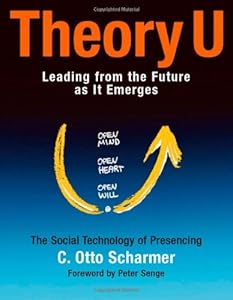
In the book Theory U by C Otto Scharmer, the author uses the image of a painting to illustrate the nature of the U theory. I have previously covered U theory in a sequence of posts, starting here. To answer the question 'what?' we can look at the painting. The painting itself tells us nothing about the future but it has a history and in itself we may learn a great deal. To answer the question 'how?' we can watch the artist at work. And so we learn the technical aspects of the art of painting. Finally, we can ask the future orientated question 'why?' and this time the image is of the artist contemplating the empty canvass. In a sense there is little to see but without this vital step there would be no painting at all.
Perhaps mission, formation and unity express this threefold approach. When we speak only of mission and unity, we not only lose the contribution made by formation but lose a sense of the role mission and unity play in the church.
Mission addresses the question 'what?' It is inevitably past orentated as it is an expression of the faith. It is those who are formed by the church acting on their formation. This is not to say it is static, far from it; it is the church in action.
Formation addresses the 'how?' of the church. It is in formation that we encounter the insights of our own tradition and then the insights of others. As Christians we need to learn about our faith, about how to pray and how to preach and minister. We need to learn something of the breadth and diversity of faith. It is something we need to learn to do both within and between our traditions.
Finally, we approach the question, 'why?' We are brought back to the opening words of Genesis and John, 'in the beginning ...' And we discover it is about diversity, about the conversation between God and matter and later God and humanity. We are united in the conversation. In the conversation we find our purpose and grow into our mission.
I'm going to move onto a new sequence next but hope to return to formation as a theme later. The next step will be to explore the practicalities of ecumenical formation.
This is the fifteenth and penultimate post in a sequence about ecumenical formation.
Ecumenism is about relationships between people. Social capital makes a distinction between bonding and bridging relationships. The former take place within a group and builds up capital as people learn to trust one another. Bridging capital is between groups and is the more challenging of the two. It is challenging because it demands mutual respect for church cultures that have evolved over many years.
So, in formation we see the two movements of roots down and walls down. These are not necessarily sequential. Although bonding capital needs to be developed first, Christians will return to their own traditions, frequently as they regularly participate and deliberately as they bring new questions to ask of their own tradition.
But the encounter with others is crucial because it raises questions as it brings us into new relationships with God. As we debate, the spirit is at work and brings us into new truths. The ecumenical church grows through the sum of all these conversations.
This is fourteenth in a sequence about ecumenical formation.
Once we place formation at the centre of ecumenical thinking, we find ourselves in a very different place from traditional Protestant full visible unity. When mission is at the centre, full visible unity makes sense. The argument goes that a united church is good for mission. Lack of unity gives the wrong impression.
Why should it? The only reason lack of unity seems negative is because we make it so. Unity expressed through church structures is no more impressive than disunity expressed through church structures. Some of the fastest growing churches are anti-ecumenical and split off from the mainstream. Sometimes this illustrates the problems we encounter when formation is not central. To go it alone is to cut your tribe off from what is common to all traditions. It isn't a sign of pure doctrine but of truncated doctrine, based on the whim of unaccountable leaders rather than on the shared faith of the people.
We need to think not upon imperial structures of top down authority but upon bricolage (the illustration is a 'Monstrous "Heath Robinson"-style contraption for cracking nuts', by velodenz). If there is trust between traditions than we can cobble together what we need from whatever is around us. It is tidy minds who create the problems; we must have a hierarchy with everything in place or failing that go it alone to preserve our precious purity.
We need in summary a culture of asking for forgiveness rather than for permission. The confidence to ask forgiveness comes through good formation, formation which makes us independent of the structures and doctrines that nurture us.
This is the thirteenth post in a sequence about ecumenical formation.
There are then, two movements in ecumenical formation. I came across a slogan at a conference about Arminianism last year, 'Roots Down, Walls Down'.
Logically roots down comes first, although in time the two movements will interact with one another. As we explore our own tradition (even before we think of it as our own), we drill down into it. We learn of the distinctive insights, shared by those who belong to it. This is not to claim traditions are unchanging. Compare the agendas of Methodist Conference in the 1930s and today. The concerns about the sabbath and temperance have almost vanished, replaced by political issues such as racism, poverty and the environment. And yet it is still the same tradition.
Drill deeper still and we begin to tap into more that is shared with other traditions. Methodism's history means it shares some of its heritage with the Church of England for example. But the point is we approach this material through the Methodist doctrine and church structures that make Methodists different from Anglicans.
At this stage encounters with other traditions make sense. We can challenge each other to go deeper, confident we are drilling into the same bedrock. We should not need to defend our differences because in discovering them, we help those of other traditions see their own from a new perspective. This approach is known as receptive ecumenism. We discover as our roots go down, so too the walls between us come down.
In following this path, we steer a course between two unwelcome extremes. First, the desire to tidy up and bring everything into a single structure. The challenge is to love and support one another despite our differences. To convert someone would be to lose their insights from the conversation.
The other is the desire to fly apart, to abolish the traditions and go it alone. Ultimately, I don't think this is possible. To choose no tradition, is failure to acknowledge what influences you. Ultimately it displays spiritual ignorance, lack of awareness of one's own roots.
This is the twelfth post in the sequence about Christian formation.
Last time, I suggested formation is familiarity with a library of texts associated with a particular tradition. It is further supported through encounters with other traditions, which cause us to draw upon experience of our own tradition and make it conscious. Indeed formation takes place not only through ecumenical encounters or interfaith work but in any missionary situation where we talk about God.
This leads me to ask whether, through a formational lens, we see more clearly the case for reconciled diversity.
Full visible unity strongly implies structural unity. This requires analytical theological negotiation. So step by step, as each difference is dealt with, theologians move on to the next problem.
With a focus on formation however, equiping all church members with insights from their own tradition and conversations between traditions, we are in a very different place. There is still a need for theologians but their focus changes to what helps communication between Christians rather than debate between scholars. This does not downplay scholarship but re-frames its energies.
A major problem with formal conversations is their lack of reception by church members. To see theological work as primarily one of formation, brings the urgent need for reception into focus.
This approach brings another debate into focus. Many claim to have abandoned the traditions and seek a Christians Together approach. The free-spirited nature of this is of great value but it tends to call into question the value of formation. We urgently need conversations between them and traditional ecumenists.
In this eleventh post in a sequence about ecumenical formation, I will explore how we can interpret Christian traditions as libraries.
I will start by unpacking the words I ended with last time, 'An open library has been replaced by a closed book'. Before the printing press, the Bible was out of the reach of most people. It was accessible, at least in Western Europe, to those who could read Latin and had access to copies in libraries or churches. This meant primarily the ordained and religious. However, it was open in that the Bible was accessible to a wider community of scholars. The printing press meant the Bible was opened up to anyone who could read in their own language. This has been enormously important to the history of the faith and to its missionary activity down to the present day. But alongside this, the fact is a set of books bound into a single volume, in a particular order, leads to this single book becoming a defensible space. It is harder to envisage an exchange between scholars of different scriptures, now the Bible is in everyone's hands.
I wonder whether Christians were really people of a book before the advent of printing? There were documents but they witnessed to experience, rather than the direct word of God. Most Christians would experience Christianity through liturgy rather than the written word. Perhaps fundamentalism is trying to turn the Christian faith into something its founders never intended, a people of a book. The Bible can be inerrant only if it is the direct word of God, which it clearly is not.
We need to understand our faith as something that exists in the debates based on scripture, rather than in the scriptures themselves. Our faith is based not on the infallibility of the written word but in the creativity of the spoken word.
What we need to do is understand the change from library to single volume and its implications. Perahps we need to regain a sense of each Christian tradition as a library.
Before printing, it was possible to build up a library where the Canon would be interpolated by other texts. Each tradition would accumulate its own distinctive liturgies, theological interpretations and church law. Together these would be a concrete record of what is often called tradition. Some texts would be closer to the centre of the tradition and some more peripheral. Ecumenism generates texts which are shared between traditions and might have a place in several libraries.
So, Methodists treasure the writings of the Wesleys (Charles' hymns and John's notes, diaries and sermons). These are valued in common between all the traditions that look to the Wesleys as their point of origin. Then each Methodist Church will value their particular expression of their church law (CPD in Britain) and certain theologians who grow out of their specific tradition. Writers from other Methodist traditions will have a shared place too.
Other traditions have similar libraries, eg the Church of England has a special place for the Book of Common Prayer, as well as its Canons and other expressions of church law. We largely encounter each others' libraries through our conversations, because only the scholars will have in-depth knowledge of other traditions' libraries.
This is of course, a major problem for ecumenists. Ecumenism becomes a specialist pursuit. It is hard to follow the debates between scholars if you are living a life.
On the other hand, non-scholars can specialise in their own tradition. Methodist local preachers for example learn Methodist doctrinal emphases and are encouraged to be familiar with the Wesleys. It is fashionable to take some of this with a pinch of salt but if we're serious about ecumenism perhaps we should take our own texts a little more seriously.
As we are formed by our own tradition, we take on board, sometimes unconsciously, its doctrinal emphases. In this sense we become living books. It is then in encounters with Christians from other traditions, in the exchange of insights, we are encouraged to draw on the resources of our own tradition. Our unconscious formation becomes conscious and we experience a deepening of our faith.
Consultancy for Mission and Ministry This should take you to details of the Consultancy for Mission and Ministry course at the York Insititute. See my post about non-directive consuultancy around 9 September 2009.
 Image by freefotouk via Flickr







Recent Comments